
About All Tours Hiking ToursFull Day ToursFrom El Calafate ToursFrom Puerto NatalesFrom Punta Arenas ToursPrivate ToursGrey Glacier Tours Directions Hours & Fees
Find Tours 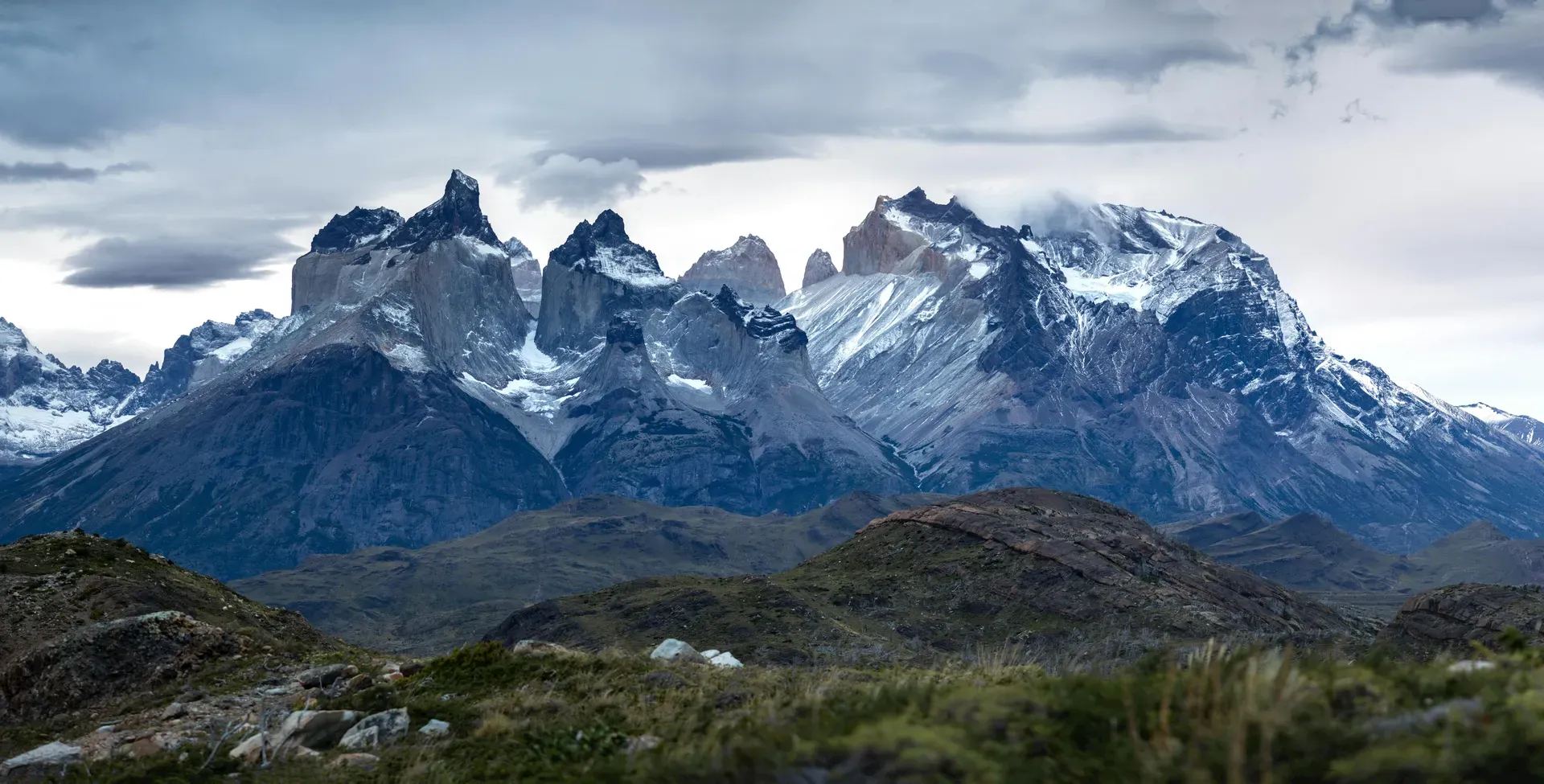
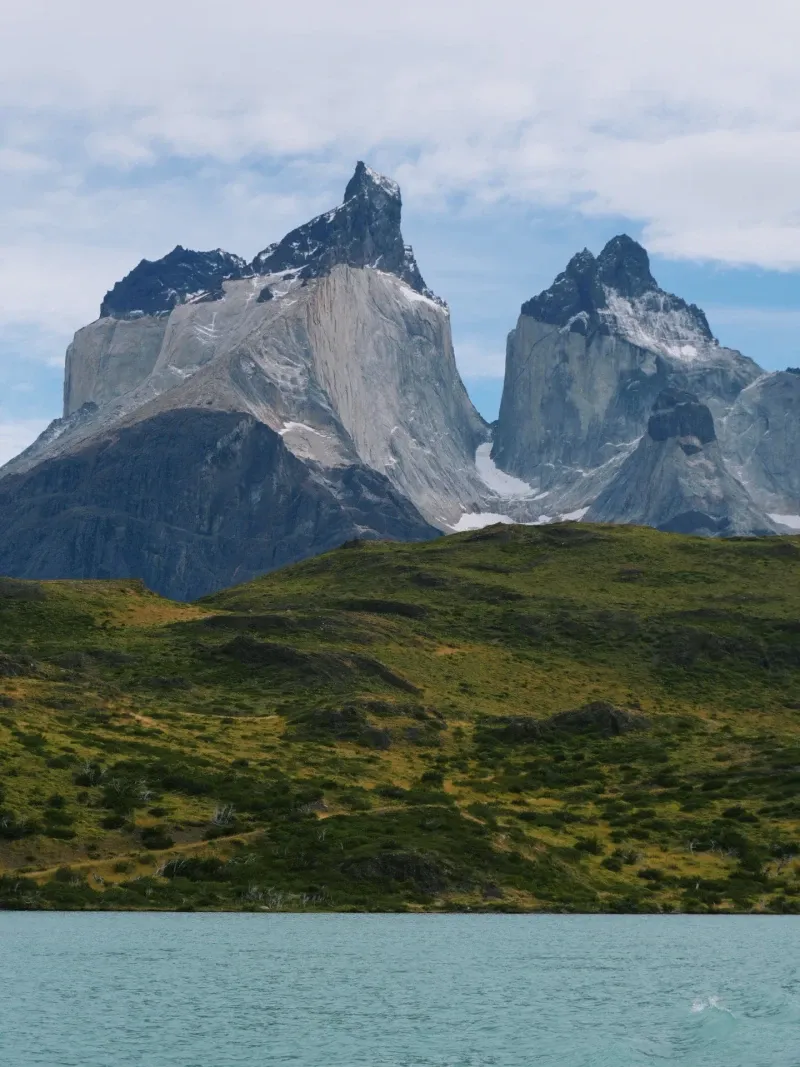
Spanning 227,298 hectares in southern Chile, this UNESCO Biosphere Reserve is defined by its 12-million-year-old granite peaks and the massive Southern Patagonia Ice Field. Hikers navigate Magellanic subpolar forests and Patagonian steppe to reach the base of three sharp towers rising 2,500 meters above sea level.
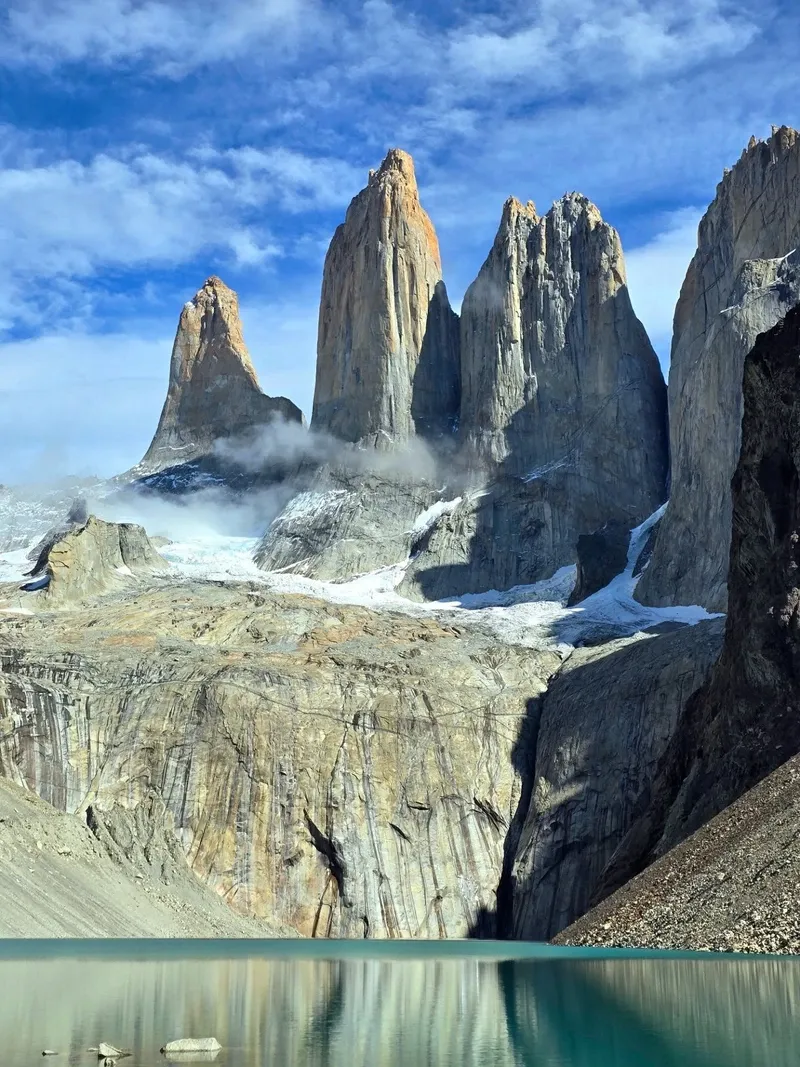
Find Guided ToursTorres del Paine National Park covers 227,298 hectares in southern Chilean Patagonia, located 112 kilometers north of Puerto Natales. The protected area encompasses a diverse landscape of turquoise glacial lakes, the 6,000-square-mile Southern Patagonia Ice Field, and dramatic mountain ranges. At its center stands the Paine Massif, an independent geological formation featuring the park's namesake three sharp granite towers, which reach elevations up to 2,500 meters.
Tectonic forces and powerful glacial erosion sculpted this geography over 12 million years. The resulting terrain spans four distinct ecological zones: the Patagonian steppe, Pre-Andean shrubland, Magellanic subpolar forest, and Andean Desert. Cerro Paine Grande rises above them all as the highest peak at 2,884 meters above sea level.
Long before it became a park, the region held deep cultural and mythological importance for the indigenous Aonikenk, or Tehuelche, people. They viewed the granite peaks as sacred stone guardians and the home of powerful nature spirits. European awareness grew after British writer Lady Florence Dixie described the towers as 'Cleopatra's Needles' in 1880.
The Chilean government officially established the area as Parque Nacional de Turismo Lago Grey on May 13, 1959, consolidating former private haciendas into a vast natural reserve. Following the first ascent of the North Tower by Italian mountaineer Guido Monzino in 1957, and the pioneering of the Circuit trail by John Gardner in 1976, international interest expanded rapidly. Today, the park is a UNESCO Biosphere Reserve that attracts 150,000 annual visitors and was voted the 'Eighth Wonder of the World' in a global poll of five million people.
Discover the full history and cultural significance on our About page.
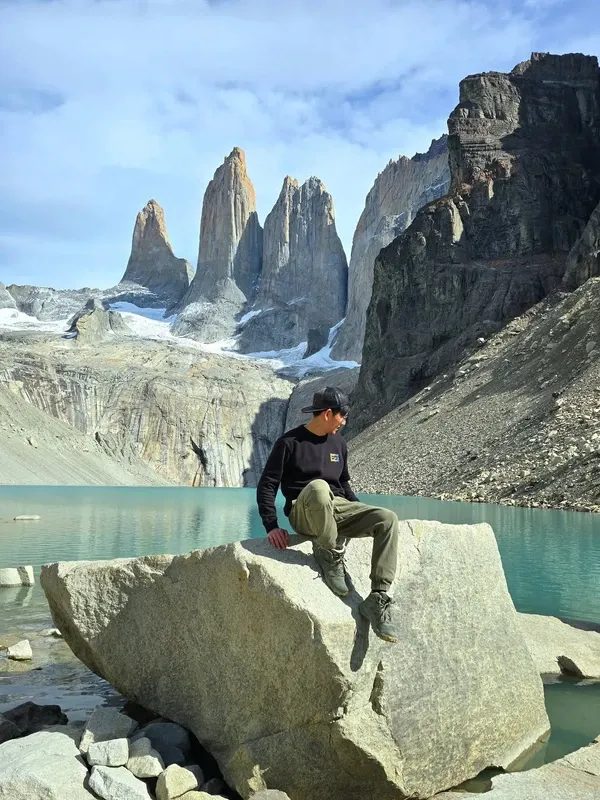
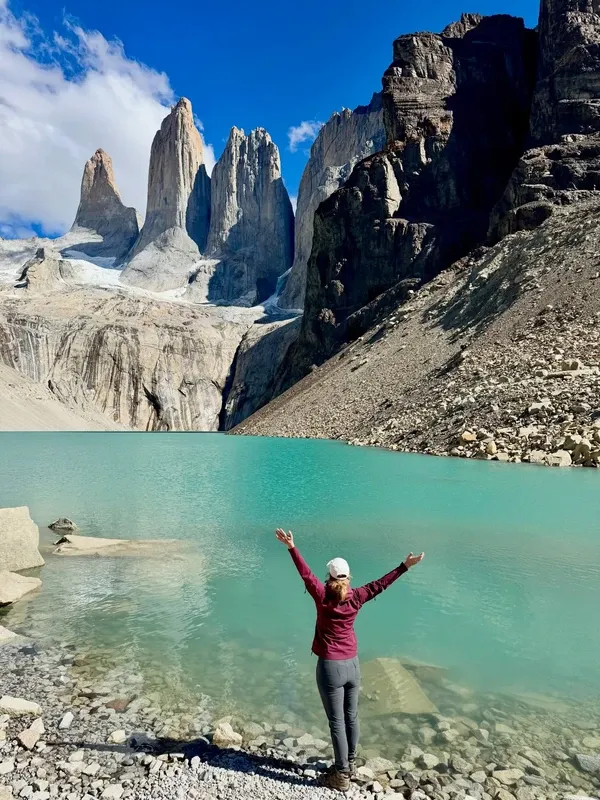
The hike through the Ascencio Valley leads to a glacial lagoon at the base of the park's namesake peaks. Here, Torre d'Agostini, Torre Central, and Torre Monzino rise abruptly to 2,500 meters. This demanding trail rewards hikers with close-up views of the 12-million-year-old granite formations.
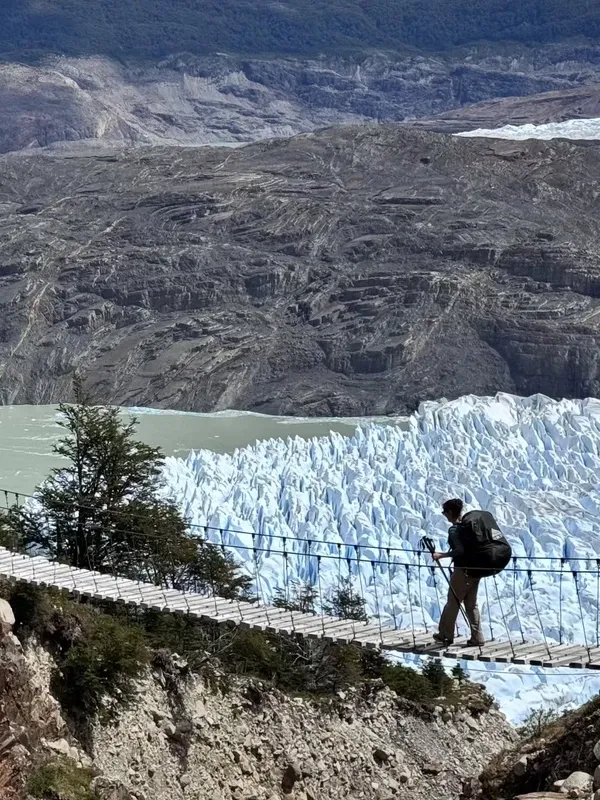
A boat trip across Grey Lake brings you face-to-face with the massive Grey Glacier. You will navigate past floating blue icebergs to reach the glacier's three-toed foot. This ice mass forms part of the immense Southern Patagonia Ice Field, which covers 6,000 square miles. Listen closely for calving ice.
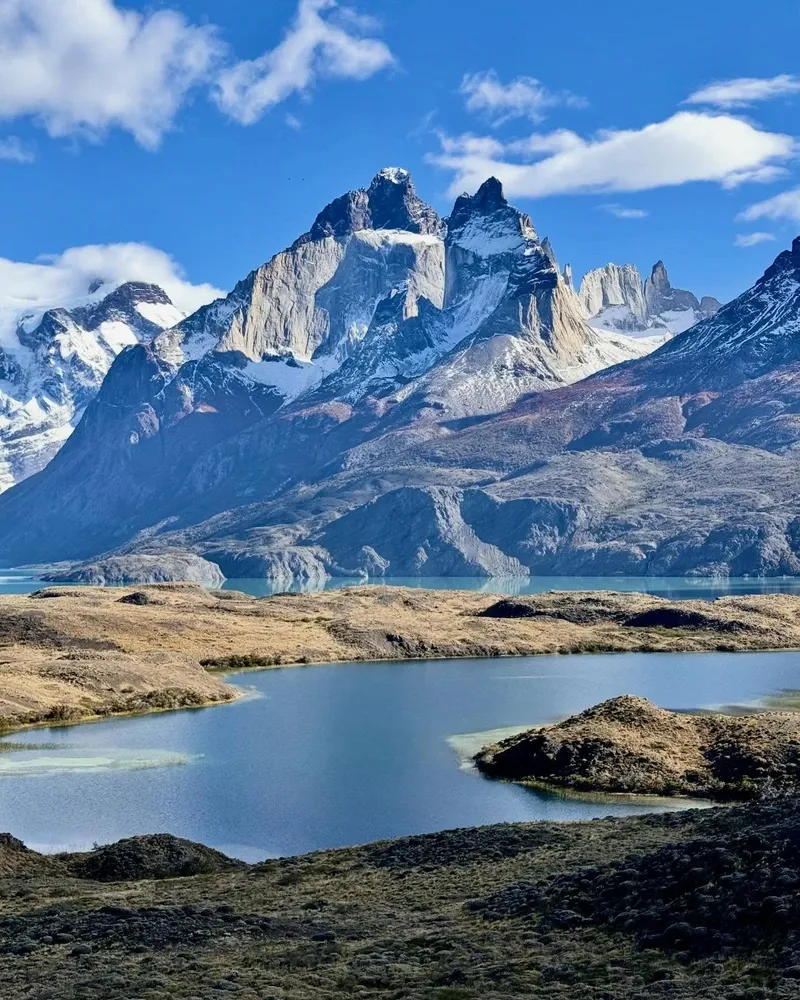
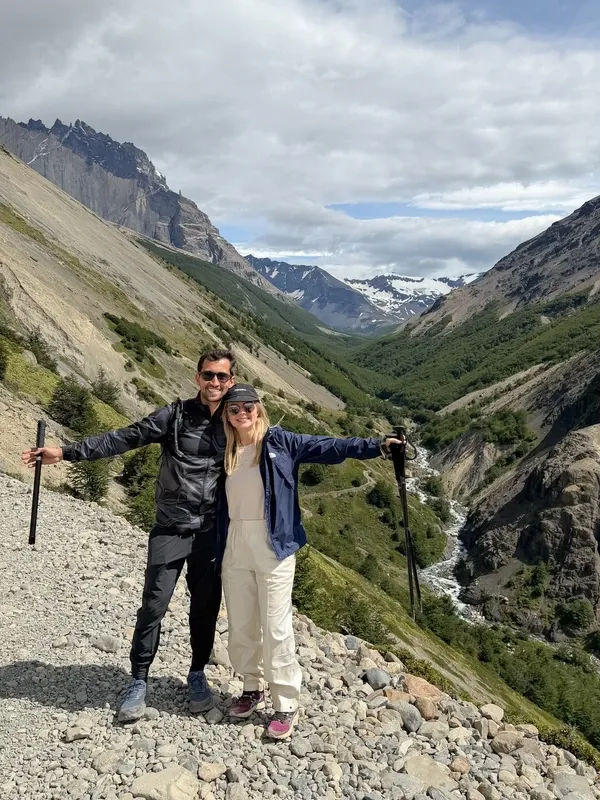
Located in the middle of the W-Trek, the French Valley presents a spectacular glacier-fringed landscape. Hikers cross suspension bridges and walk through dense Patagonian forests beneath the Cuernos del Paine. The trail terminates at viewpoints providing 360-degree vistas of steep granite peaks and hanging glaciers.
Situated in the northeastern sector, Laguna Azul provides a clear perspective of the three towers without a strenuous climb. Visitors can watch herds of guanacos grazing near the water. The location offers excellent visibility for photographing the 2,500-meter peaks during the long spring and summer days.
Hand-picked tours with free cancellation and verified reviews
 Free Cancellation 9h
  Free Cancellation 14h
  Free Cancellation
  Free Cancellation
  Free Cancellation 16h
  Free Cancellation
  Free Cancellation
  Free Cancellation 10h
 The most favorable time to visit Torres del Paine is during the spring and summer months between October and April. These seasons offer the warmest weather and up to 17 hours of daylight, providing ideal conditions for multi-day trekking and photography.
Marking the beginning of the park's optimal visitation period, spring brings warming weather and clear conditions. This provides excellent visibility for photographing the Paine Massif and its iconic granite peaks.
Summer provides the warmest weather and up to 17 hours of daylight. These conditions are ideal for completing the multi-day W and O trekking circuits across the 227,298-hectare park.
Falling at the end of the prime visitation window, these months still offer favorable conditions for completing the major treks before the challenging and freezing winter temperatures arrive.
Winter brings freezing temperatures dropping to -7°C and limited daylight from 9 AM to 5 PM. Although less windy, navigating the snowy trails requires mandatory guides and specialized equipment.
The Laguna Azul and Sarmiento entrance gates operate year-round from 8:30 a.m. to 8:30 p.m. The administrative headquarters and visitor center in the Lago Toro sector are open daily from 8:30 a.m. to 8:00 p.m.
| Category | Price |
|---|---|
| Foreign Adult (up to 3 days) | CL$ 34,000 |
| Foreign Minor, ages 12-17 (up to 3 days) | CL$ 17,400 |
| Foreign National, ages 12+ (stays over 3 days) | CL$ 48,500 |
| Chilean Adult (up to 3 days) | CL$ 9,900 |
| Chilean Adult (stays over 3 days) | CL$ 14,200 |
| Chilean Minor, ages 12-17 (up to 3 days) | CL$ 5,500 |
| Chilean Minor, ages 12-17 (stays over 3 days) | CL$ 8,200 |
| Children under 12 (all nationalities) | Free |
| Chilean Seniors over 60 | Free |
| People with disabilities (all nationalities) | Free |
Visitors must purchase entrance tickets in advance through the official CONAF website. You must also secure confirmed reservations for all campsites or refugios prior to your arrival at the park.
For complete schedules and ticket prices, visit our Hours & Fees page.
Reaching Torres del Paine requires coordinating air and ground transport through the gateway town of Puerto Natales. Visitors typically fly into the region before continuing by road to the park entrances.
📍 112 km north of Puerto Natales, Southern Chilean Patagonia
Public buses travel from Puerto Natales to the main park entrances at Laguna Amarga or Pudeto. The 112-kilometer route takes approximately two hours to complete. Companies like Bus-Sur and Buses Pacheco operate daily departures along this corridor. Passengers should secure tickets online well in advance to guarantee a seat during the busy summer season.
The primary air link to the region operates out of Santiago's Pudahuel airport. Direct flights cover 3,100 kilometers to Punta Arenas in about three and a half hours. After arriving in Punta Arenas, travelers must arrange ground transport for the remaining distance. The subsequent road trip to the gateway town of Puerto Natales takes an additional three hours and thirty minutes.
For detailed transport options and routes, visit our Directions page.
Visitors must purchase entrance tickets through the CONAF website prior to arrival. You also need confirmed reservations for all campsites or refugios. Without these documents, entry is denied. Foreigners pay CL$ 34,000 for stays up to three days, while longer visits cost CL$ 48,500.
Law 20,653 bans the use of fire or any heat sources fueled by wood or charcoal. Violating this rule carries severe legal consequences. Penalties include fines up to 2,000,000 CLP, expulsion from Chile, or three years in prison. Littering is also strictly prohibited and legally punishable.
Patagonian weather shifts rapidly across the park's four ecological zones. Wear a moisture-wicking base, an insulating middle layer, and a waterproof outer shell. Bring sturdy, fully broken-in hiking boots to navigate the rocky terrain. High-quality socks are critical to prevent blisters during long hikes.
Visiting between May and September brings freezing temperatures down to -7°C. Daylight is severely limited, lasting only from 9 AM to 5 PM. If you plan to hike the W Circuit during these months, you must hire a certified specialized guide. Proper specialized equipment is also mandatory.
The park sits 112 km north of Puerto Natales. Public buses take two hours to reach the Laguna Amarga or Pudeto entrances, with tickets costing between CL$ 8,000 and 15,000. Book your transit online early. This guarantees a seat during the busy spring and summer months.
The challenging Base Torres hike is not recommended for young children. Families should instead visit Laguna Azul in the northeastern sector. This area provides a clear perspective of the 2,500-meter granite towers without the strenuous climb. Visitors can also spot grazing guanacos along the route.
Serving as the primary gateway town, this logistical hub is where travelers organize transport to the park. Visitors can book operators like Bus-Sur for the two-hour drive to the main entrances.
Encompassing 6,000 square miles, this massive ice expanse feeds the region's glaciers. Visitors can witness its sheer scale by navigating past floating blue icebergs to the foot of Grey Glacier.
Located in the northeastern sector, this lake provides a clear perspective of the 2,500-meter granite towers without a strenuous climb. The accessible area operates year-round and features grazing guanacos.
Read what travelers share about their experience visiting Torres del Paine — from practical tips to personal highlights.
Foreign adults pay CL$ 34,000 for stays up to three days, while stays longer than three days cost CL$ 48,500. Minors aged 12 to 17 pay CL$ 17,400 for short stays. Entry is free for children under 12 and people with disabilities of any nationality.
The optimal time to visit is between October and April during the spring and summer months. These months offer warmer weather and up to 17 hours of daylight, creating ideal conditions for hiking the W and O circuits. Winter visits from May to September face freezing temperatures down to -7°C and require specialized equipment.
Travelers can take a direct three-and-a-half-hour flight from Santiago to Punta Arenas. From there, it requires another three-and-a-half-hour drive to reach Puerto Natales, the primary gateway town. Public buses run the remaining 112 km from Puerto Natales to the park entrances, taking about two hours and costing between CL$ 8,000 and CL$ 15,000.
Yes, visitors must purchase entrance tickets ahead of time through the official CONAF website. You also need confirmed reservations for all campsites or refugios before arriving at the park. If you plan to hike the W Circuit in winter between May and August, hiring a certified guide is mandatory.
Hikers should utilize a three-layer clothing system featuring a moisture-wicking base, an insulating mid-layer, and a windproof and waterproof outer shell. Sturdy, broken-in hiking boots and high-quality socks are essential for navigating the rocky terrain. Heat sources using organic fuel, like wood or charcoal, are strictly prohibited by local law.
The park provides several accessible options, including ramps at the Serrano Visitor Center and a flat, well-maintained pathway around Grey Lake suitable for mobility scooters. Specialized operators offer partially accessible vans with ramps to reach key viewpoints. Seniors can also take panoramic vehicle tours and boat trips to Grey Glacier with minimal physical exertion.
Visit durations vary based on your chosen activities, ranging from a single-day panoramic tour to a 10-day expedition. Completing the popular W-Trek takes about five days. Hiking the full O-Circuit requires eight to ten days on the trail.
No, drones are completely prohibited everywhere within the 227,298-hectare park boundaries to protect the ecosystem and prevent disturbances to other visitors. Photography and wildlife watching are strictly limited to official marked trails during daylight hours.
Browse verified tours with free cancellation and instant confirmation.
Find Tours